Tel Dan Stele
First inscription ever found naming the "House of David" — written by an enemy king c. 840 BCE.
Before this stele surfaced in 1993, minimalist scholars routinely dismissed David as a legendary figure, no more historical than King Arthur. Then an Aramean king's own victory boast turned up, naming the king of Israel and the king of the "House of David." This is the first extrabiblical mention of King David by name — written not by an Israelite, but by a hostile neighbor with every reason to minimize Israel's importance, not invent a rival dynasty for it. Though it took a while for scholars to accept, the Tel Dan Stele confirmed that the Davidic dynasty was real and recognized by surrounding nations within a century of David's reign.
View Artifact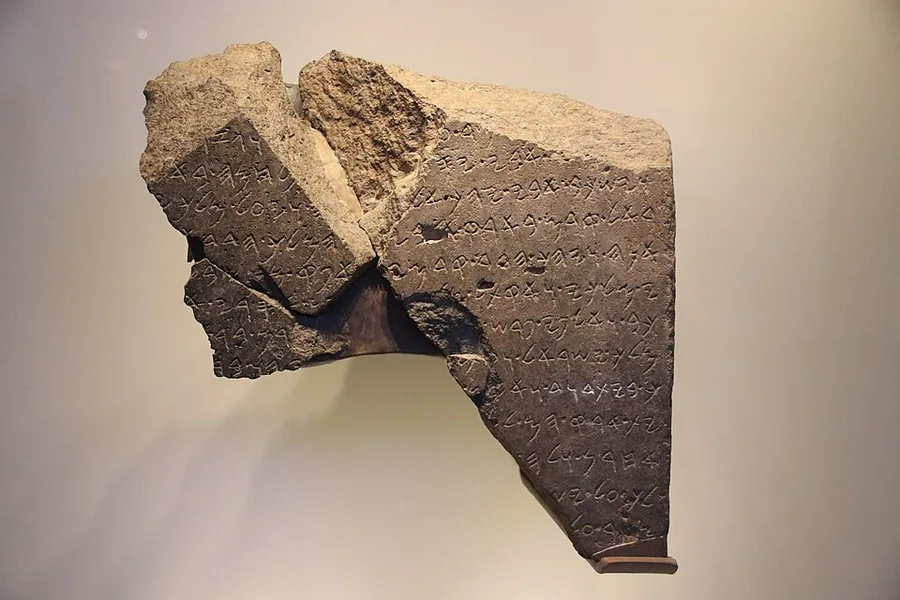
Ketef Hinnom Silver Scrolls
Silver amulets inscribed with the Priestly Blessing (Numbers 6:24–26) — the oldest surviving biblical text, over 400 years older than the Dead Sea Scrolls.
Excavated by Gabriel Barkay in 1979 from a burial chamber at Ketef Hinnom, these two tiny silver scrolls were rolled so tightly that conservators spent years working out how to unroll them without destroying them. Once deciphered, they preserved the Priestly Blessing — "The LORD bless you and keep you..." (Numbers 6:24–26) — in wording nearly identical to the later Masoretic text. Dated to the late 7th century BCE, they predate the Dead Sea Scrolls by over four centuries, making them the oldest surviving fragment of biblical text ever found, and undercutting theories that this material was composed centuries later, during or after the Babylonian exile.
View Artifact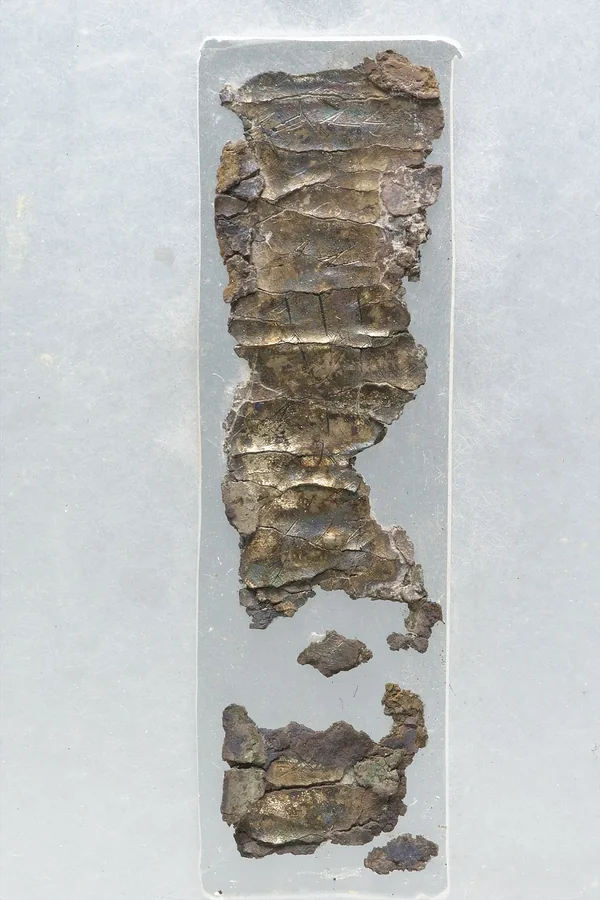
Merneptah Stele
"Israel" appears in Egyptian text for the first time (1208 BCE) — confirming the nation existed before the monarchy.
Pharaoh Merneptah, son of Ramesses II, boasts of devastating Canaan: "Ashkelon is conquered; Gezer is seized; Yano'am is made non-existent; Israel is laid waste, its seed is no more." Carved in 1208 BCE, this is the earliest certain mention of Israel outside the Bible. And the grammar gives it away: Ashkelon, Gezer, and Yano'am are each marked with the hieroglyphic sign for a city-state ruled by a king — but Israel alone is marked with the sign for a people, the term Egyptian scribes used for a foreign, nomadic group with no fixed city-state of its own and no king. Egypt's own scribes recognized Israel in Canaan by 1208 BCE as a distinct people, centuries before any doubter claimed the name appeared in the record.
View Artifact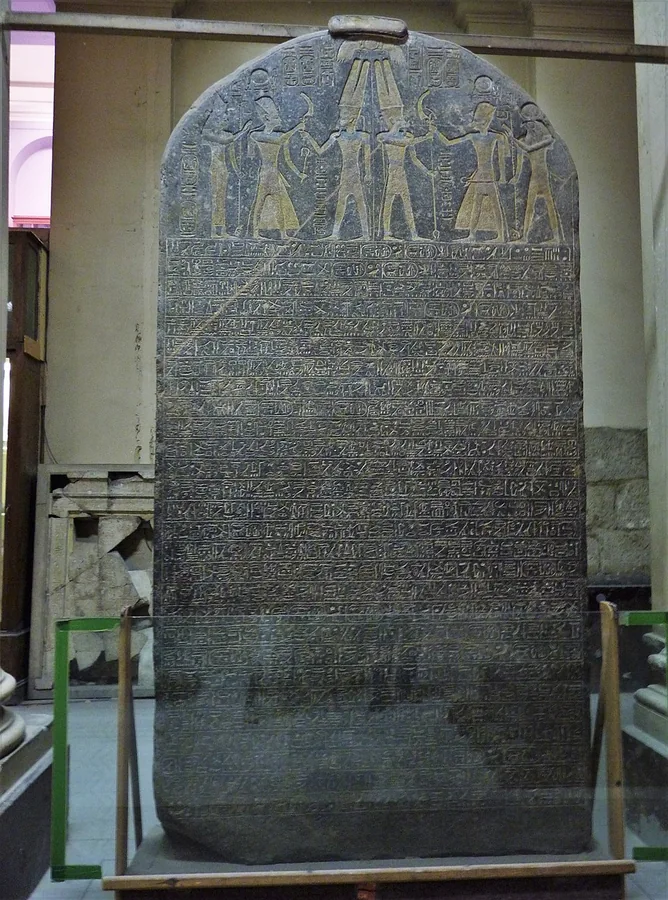
Sennacherib's Prism
Sennacherib names Hezekiah of Judah by name. His own annals confirm he never took Jerusalem.
Sennacherib's official clay prism names "Hezekiah the Judahite" explicitly, lists 46 Judean cities captured, and boasts of trapping him "like a bird in a cage" — but conspicuously never claims to have taken Jerusalem. This matches 2 Kings 19 precisely, where Sennacherib's army is struck down overnight and he withdraws to Nineveh without ever taking the city — an Assyrian king who bragged about every other conquest goes conspicuously silent at exactly the point the Bible says the siege failed. Both sides independently confirm the same siege, the same king, the same outcome.
View Artifact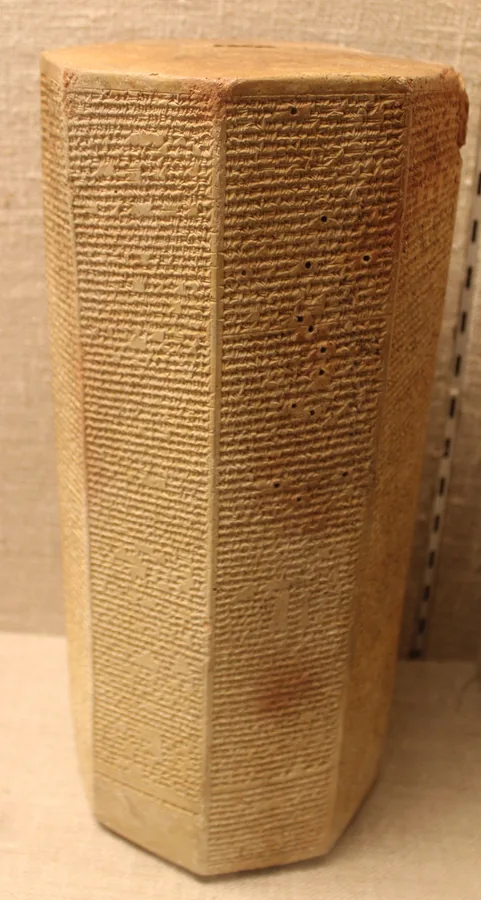
Black Obelisk of Shalmaneser III
The only surviving portrait of a biblical Israelite king: Jehu bowing before Shalmaneser III, c. 841 BCE.
When Austen Henry Layard unearthed this black limestone obelisk at Nimrud in 1846, he uncovered something no one expected to find: a picture of a biblical king. One panel shows a man face-down on the ground, forehead nearly touching the dirt, presenting silver, gold, and a golden vessel to the Assyrian king — the label beside him reads "Iaua son of Omri", King Jehu of Israel. It's the only surviving image of any king of Israel or Judah ever found. The obelisk's annals add another detail: they call Hazael of Damascus "son of a nobody" — the Assyrian term for a usurper with no royal blood — matching 2 Kings 8:15's account of Hazael murdering his way to the throne.
View Artifact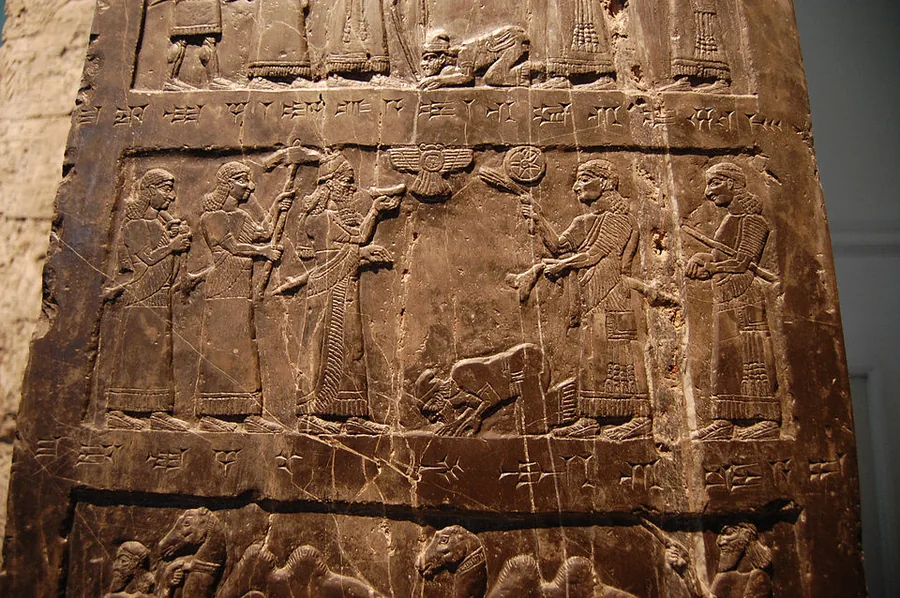
Nebo-Sarsekim Tablet
A minor Babylonian official gets one throwaway mention in Jeremiah 39:3 — and a routine museum receipt confirms his name and title, word for word.
Jeremiah 39:3 lists a string of Babylonian officials present at the fall of Jerusalem — the kind of incidental detail no ancient writer expects anyone to fact-check. In 2007, Assyriologist Michael Jursa was cataloguing a routine 595 BCE temple donation receipt in the British Museum's archive, acquired over a century earlier and never closely read, when he recognized a name: "Nabu-sharrussu-ukin, chief eunuch of Nebuchadnezzar II" — Nebo-Sarsekim, word for word. He's a minor figure named once, with zero plot importance — exactly the kind of detail an invented story wouldn't bother including, and exactly what a firsthand account would casually get right. If Jeremiah nailed a background bureaucrat's name and title, that's real evidence the text is drawing on genuine memory, not later legend.
View Artifact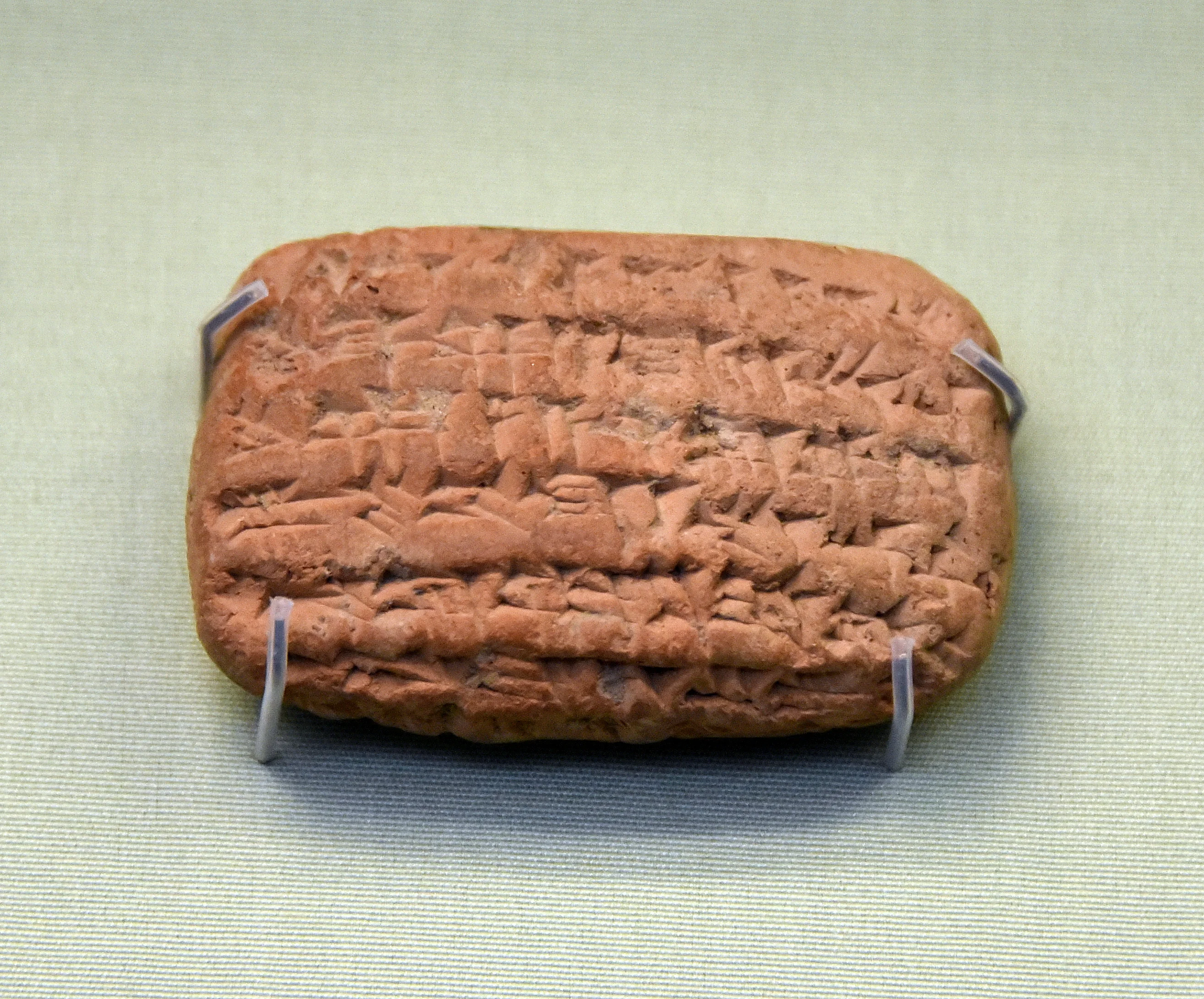
Deir Alla Inscription
A biblical prophet many assumed was pure literary invention — until his name turned up on a wall, in a country that had never read the Bible.
Numbers 22–24 casts Balaam as a famous foreign prophet, hired by the king of Moab to curse Israel. Outside the Bible, there was no trace of him — the kind of detail that makes it easy to assume a figure was invented for the story. Then in 1967, archaeologists at Tell Deir Alla in Jordan uncovered plaster wall fragments, written in a script with no connection to Israelite scripture, describing visions received by "Balaam son of Beor, a seer of the gods." The archaic dialect suggests the text preserves a tradition older than the wall itself — meaning a community with no connection to Israel independently remembered Balaam as a real, famous seer, long before anyone thought to write his name in a museum catalog. A purely literary invention doesn't earn its own following among people who never read the book it appears in.
View Artifact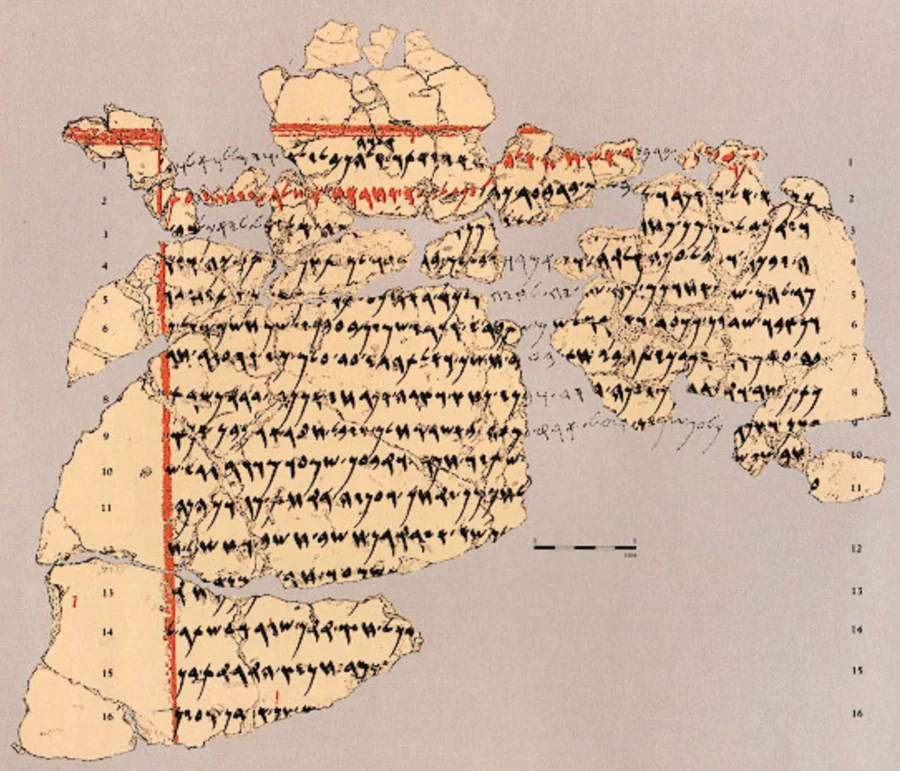
Mesha Stele
Moabite king Mesha names Omri and Israel, confirms Israelite oppression of Moab exactly as 2 Kings 3 describes.
2 Kings 3 describes Israel and Judah crushing a Moabite revolt — and Moab's own king left behind his side of the story. Mesha's inscription boasts that he broke free from "Omri, king of Israel," who had subjugated Moab for decades — confirming the very dynasty and conflict 2 Kings 3 describes, but from the enemy's own mouth. There's a second mystery buried in the stone: a damaged section is still actively disputed. Epigrapher André Lemaire reads it as a reference to the "House of David," which would make this the second-oldest extrabiblical mention of David's dynasty ever found. Other scholars read the same worn letters as "Balak," the Moabite king from Numbers 22. No one has settled it — the argument over this 2,800-year-old stone is still live today.
View Artifact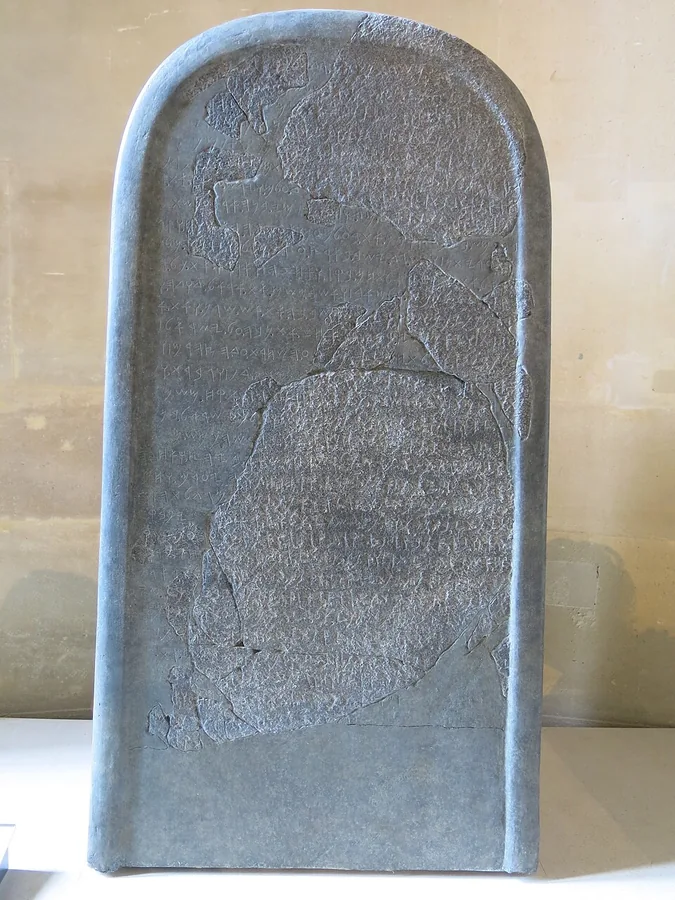
Great Isaiah Scroll
The most famous of the Dead Sea Scrolls — a complete Isaiah manuscript 1,000 years older than any previously known copy, found by chance in a desert cave.
In 1947, a Bedouin shepherd searching for a stray goat threw a rock into a cave near the Dead Sea and heard pottery shatter. Inside were the first of what became over 900 ancient scrolls — the greatest manuscript discovery of the 20th century. Among them, the Great Isaiah Scroll stands apart: a complete copy of all 66 chapters of Isaiah, dated to around 125 BCE and virtually identical to the text used in Bibles today. Before it surfaced, the oldest known Hebrew manuscript of any biblical book was a thousand years younger. Its near-perfect preservation across a millennium showed that scribes had transmitted the biblical text with extraordinary, almost unbroken fidelity.
View Artifact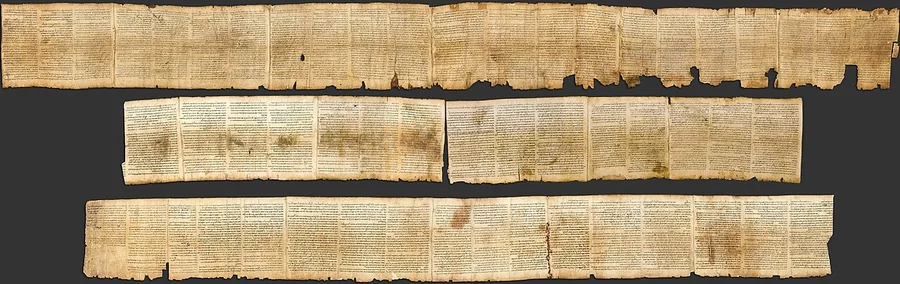
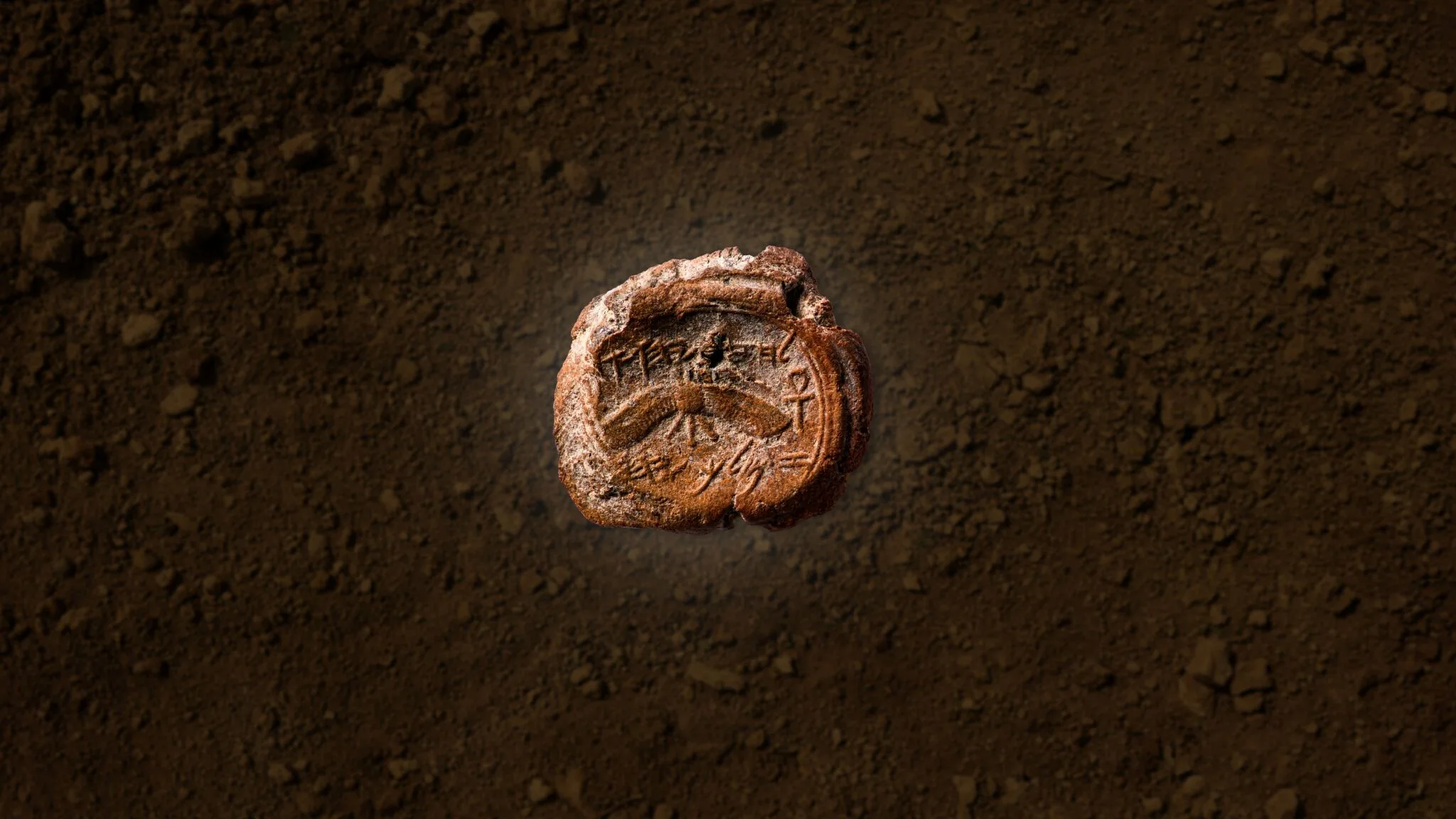
Hezekiah Bulla
The first royal seal of an Israelite king ever found in a controlled excavation — inscribed with Hezekiah's full name and title.
A clay seal impression reading "Belonging to Hezekiah [son of] Ahaz, king of Judah" was excavated at the Ophel in Jerusalem in 2015. No ambiguity, no missing letters — the full name, patronymic, and royal title, exactly as given throughout 2 Kings 18–20 and Isaiah. The first time an Israelite king's own seal has been recovered from a scientific dig.
View Artifact